
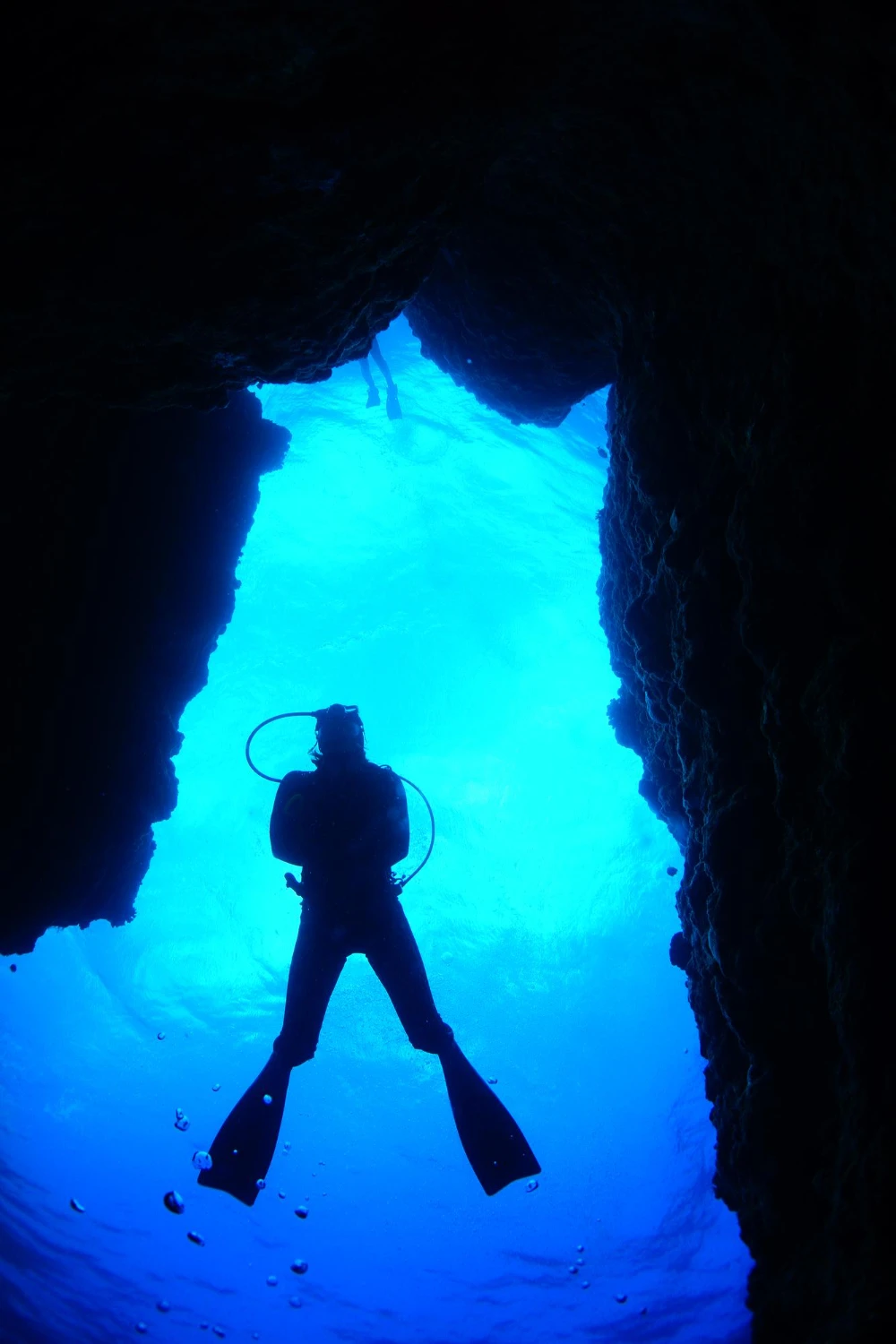
Cave diving represents the technical pinnacle of underwater exploration. You leave the open water behind to navigate flooded passages where direct access to the surface does not exist. It demands perfection in buoyancy and a calm mindset.
Students enter a world of absolute silence and crystal-clear water. You see geological formations that have remained undisturbed for thousands of years. The environment is beautiful but unforgiving of errors or complacency.
We teach you that this sport is 90% mental discipline and 10% swimming skill. You must solve problems underwater without panic because bolting to the surface is impossible. Every movement is calculated to avoid silting up the visibility.
The Rules of Accident Analysis
Safety rules in this discipline were developed by analyzing past accidents to prevent future ones. You memorize these protocols until they become second nature.
Continuous Guideline
You must maintain a continuous physical line to the open water at all times. This thin nylon line is your only map out of the cave if visibility drops to zero. You never swim away from it or lose contact.
Gas Management
We strictly enforce the Rule of Thirds for air consumption. You use one-third of your gas to enter and keep two-thirds for the exit and emergencies. This reserve saves your life or your buddy’s life if a failure occurs.
Depth Limits
Nitrogen narcosis becomes dangerous in enclosed spaces where clear thinking is vital. You stay within trained depth limits to keep your mind sharp. Technical divers use helium mixes to reduce narcosis on deeper explorations.
Light Redundancy
Darkness in a cave is absolute and disorienting. You carry one primary light and at least two backup lights on every dive. If a light fails, you deploy a backup immediately and begin your exit.
Equipment Configuration
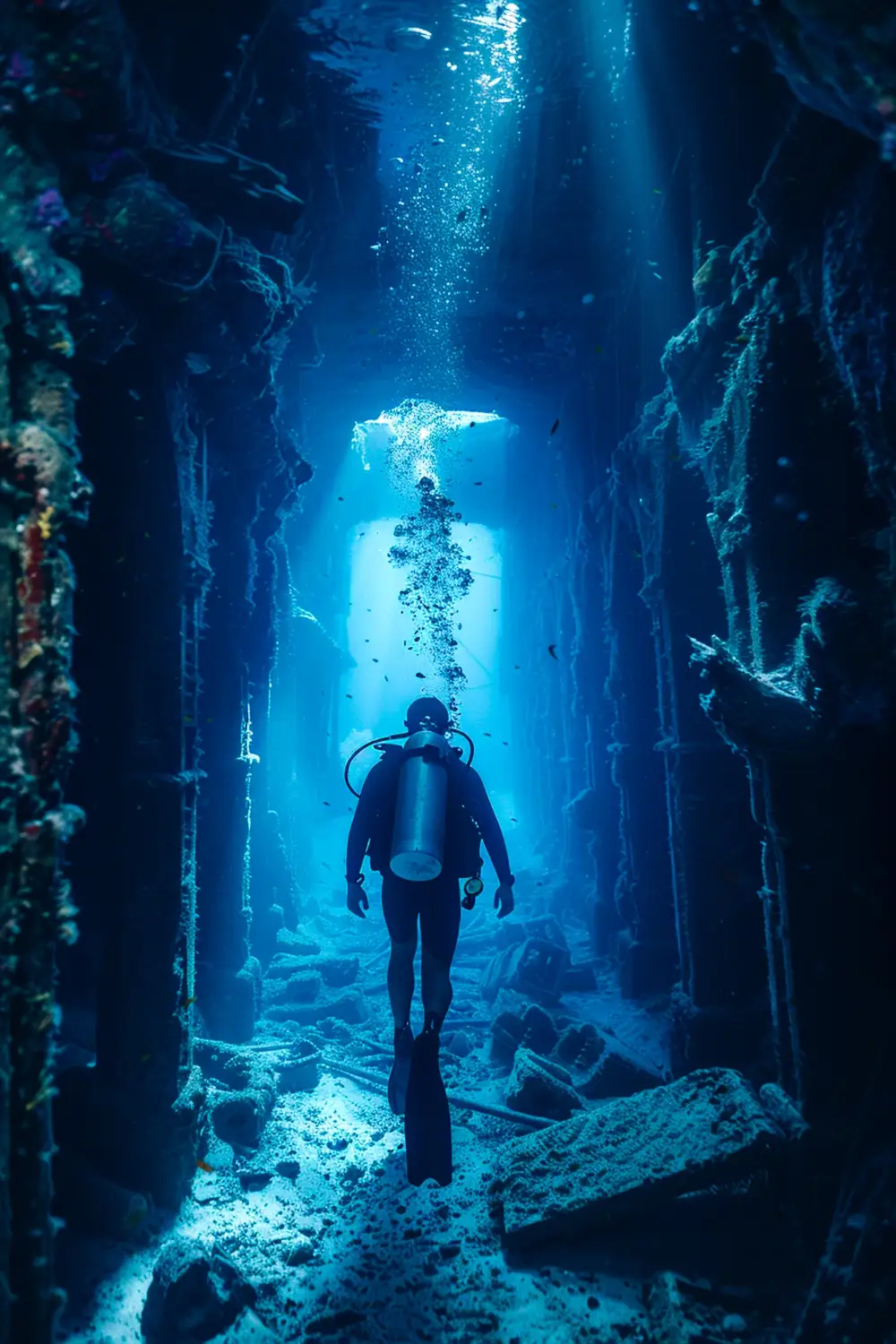
Standard scuba gear is insufficient for the demands of overhead environments. You need a streamlined system that minimizes drag and protects valves from impact.
Redundancy is the core principle of your equipment setup. You carry two independent tanks and two regulators so a single failure does not leave you without air. Every hose and gauge is clipped off to prevent snagging on rocks.
Psychological Requirements
Panic is the number one enemy of any diver in an overhead environment. You train to handle stress and equipment malfunctions methodically. Small problems must be solved before they spiral into life-threatening emergencies.
Teamwork replaces the casual buddy system used in recreational diving. You communicate constantly with light signals and touch contact. Your partner is your backup brain and your backup gas supply.
Problem-solving drills are a major part of our curriculum. We simulate zero visibility, out-of-gas scenarios, and line entanglements in a controlled setting. You learn to react with logic rather than fear.
The reward for this rigorous training is access to the planet’s inner veins. You witness history in the rock layers and experience a solitude found nowhere else. DiveTech guides you safely into the dark.
Specializing in non-native English speakers, this service that do my homework https://essaypro.com/do-my-homework delivers naturally fluent, idiom-free academic writing. Reviewers often mention how the final text helped them improve their own style over time.