
Free Diving
Free diving is the most natural way to explore the underwater world. You leave the heavy tanks behind and rely entirely on your lungs to reach the depths. It challenges your body and mind in ways that standard scuba gear never will.
Students and enthusiasts come to us to master the physiology of breath-holding. We strip away the complexity and focus on mental discipline. You will learn to move silently through the water and observe marine life without disturbing it.
Static Apnea
This discipline tests how long you can hold your breath while floating face down. It builds the mental fortitude required for deeper dives. You learn to control your urge to breathe through total relaxation.
Dynamic Apnea
You swim horizontally underwater to cover the maximum distance possible. This trains your body to use oxygen efficiently while moving. Pool sessions help you refine your finning technique before heading to open water.
Constant Weight
Divers descend and ascend using fins and a specific amount of weight. You cannot drop weights to make the ascent easier. It is the most common competitive discipline and mimics natural exploration.
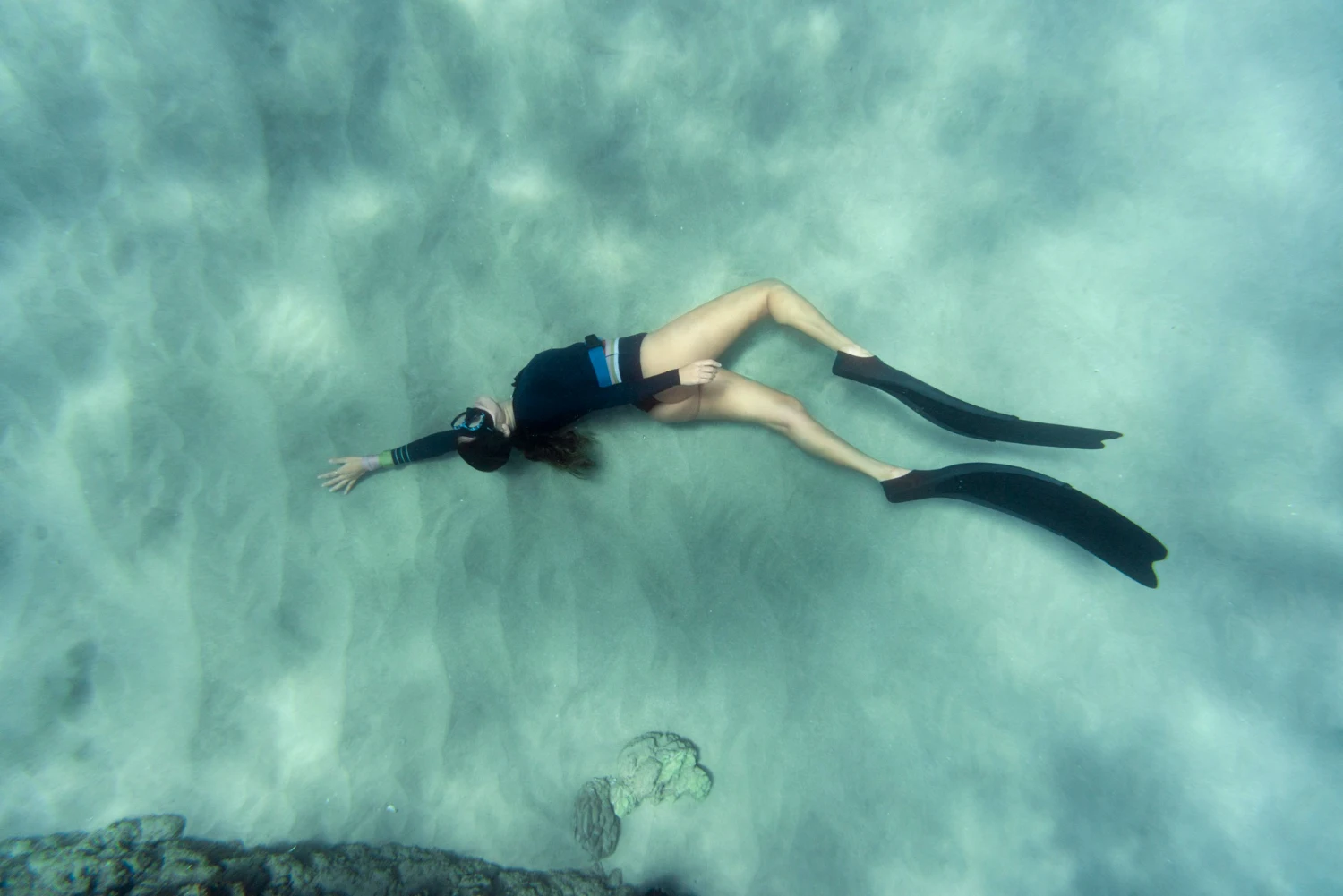
The Mammalian Dive Reflex
Your body undergoes physiological changes the moment your face hits cold water. Heart rate slows down to conserve oxygen for vital organs. Blood shifts from extremities to the core to prevent lung collapse at depth.
We teach students how to trigger and utilize this reflex intentionally. Understanding your biology helps you stay underwater longer without panic. It turns a survival mechanism into a tool for exploration.
Safety protocols are non-negotiable in this sport. You never dive alone because shallow water blackouts happen without warning. A trained buddy knows exactly how to rescue you if you push your limits too far.
Essential Gear for Breath-Hold Diving
You need less equipment than scuba, but every piece matters more. The right kit reduces drag and helps you glide effortlessly.
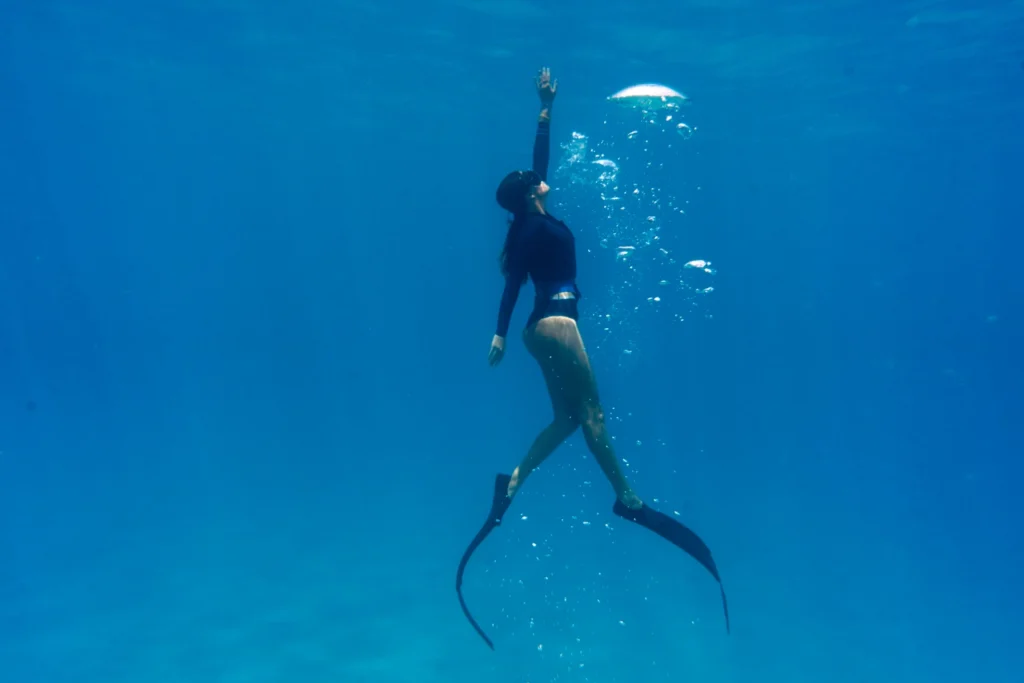
Low Volume Mask
These masks sit closer to your face and require less air to equalize. You save precious oxygen that would otherwise be wasted on mask squeeze.
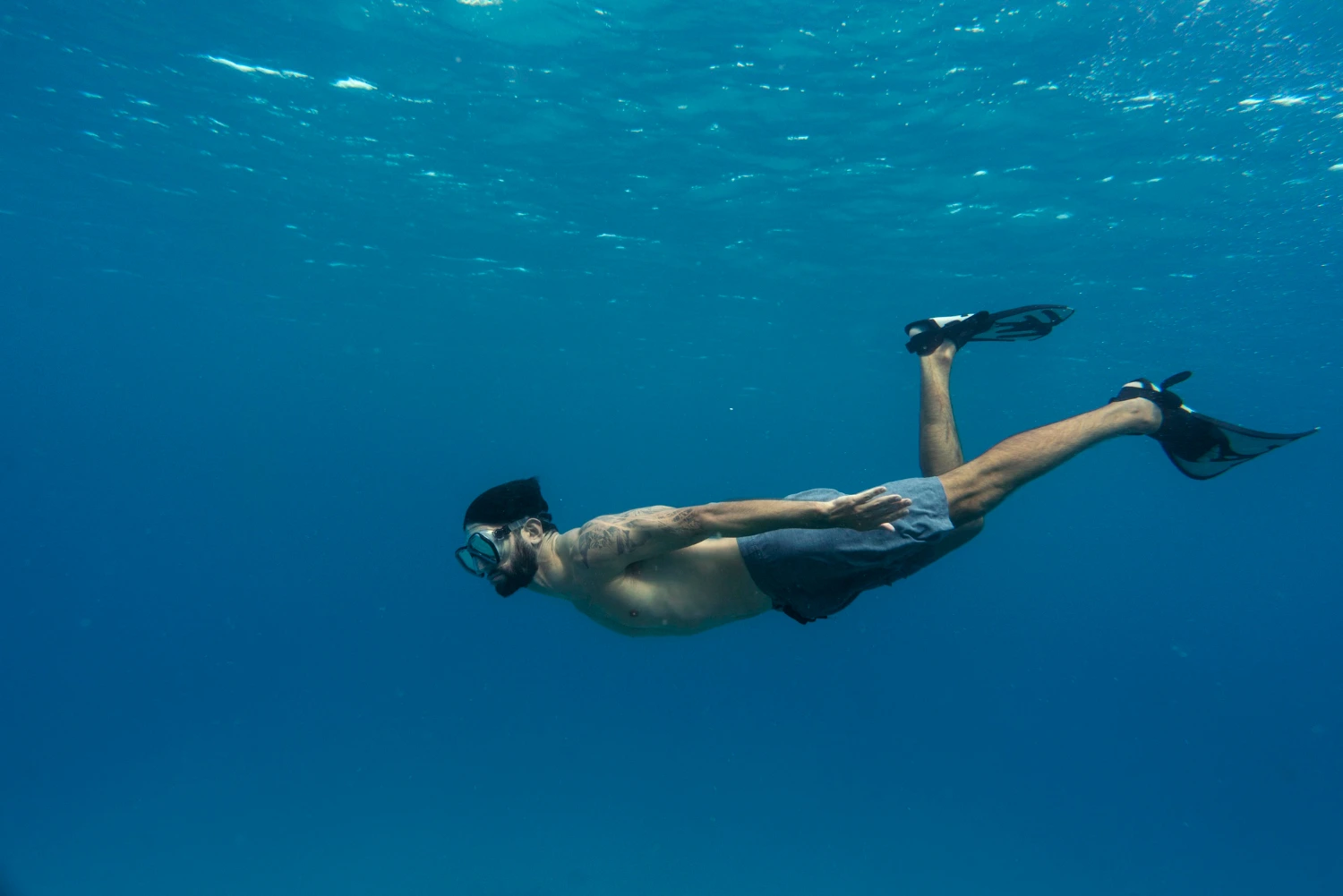
Long Fins
Long blades provide massive propulsion with minimal effort. You choose between plastic, fiberglass, or carbon fiber based on your budget and skill level.
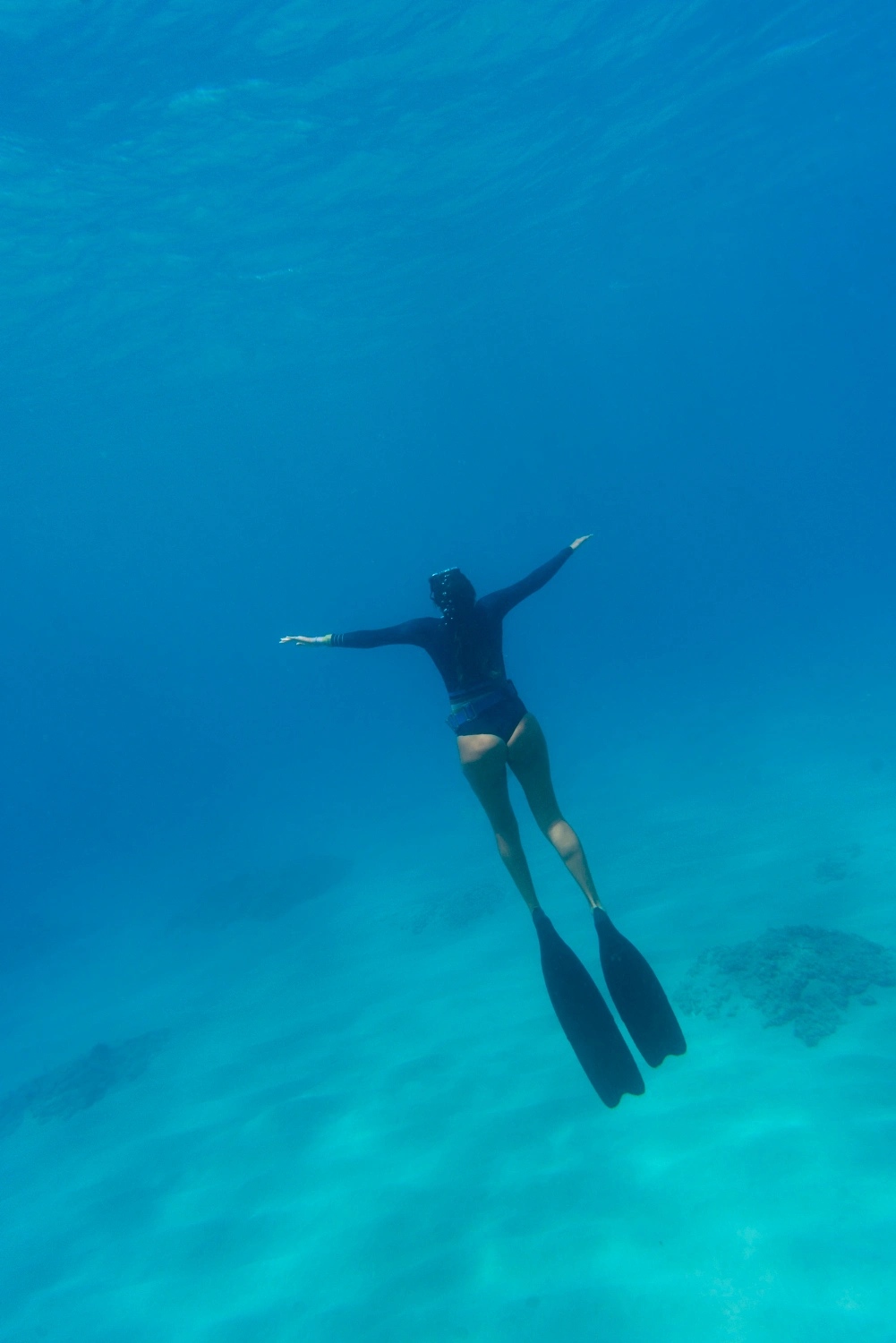
Open Cell Wetsuit
Staying warm is crucial because shivering burns oxygen rapidly. Open-cell neoprene suits stick to your skin and stop water circulation completely.
Master Your Breath
Progress in this sport comes from relaxation rather than effort. Tense muscles consume oxygen and shorten your dive time significantly. We coach you to find a state of calm before you even enter the water.
Carbon dioxide tolerance tables are a staple of our training program. These exercises teach your brain to handle the urge to breathe. You realize that the need for air is often a false alarm from your body.
Students often ask how deep they can go on day one. Depth is a byproduct of good technique and comfort, not a target to chase blindly. We prioritize form and safety over hitting a number on a depth gauge.
Join a community that values ocean conservation and personal growth. You will see the reef from a new perspective and leave no trace behind. Start your journey with the right mindset and the ocean opens up to you. University programs frequently involve multiple written projects. https://domyessay.com/write-my-literature-review helps students stay organized throughout the semester. These platforms like https://writemycollegepaper.com/ ensure essays are developed according to academic guidelines and reflect consistent writing quality.
This website is created for educational purposes only.